Quality workforce

Ability to adapt to the changing needs of business in the future  


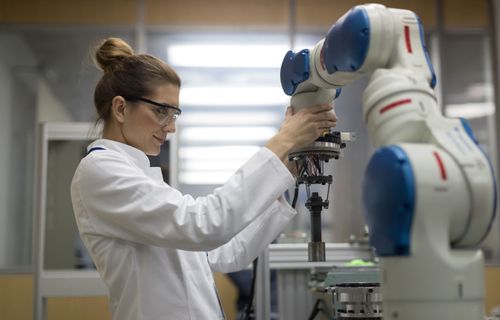
The Slovenians foster a culture of pride in work, reliability and corporate loyalty. On the other hand, building and maintaining a high-quality workforce calls for addressing skills gaps and devising succession planning strategies, as well as identifying other actions needed to create critical staff skills and a supportive work environment.


Overall productivity, 2007
GDP (PPP) per person employed (in US$)

Source: IMD - World Competitiveness Yearbook, 2008


The school system and post-compulsory educational opportunities provide vocational skills and knowledge for activities with higher value-added at affordable price. A national qualification can be achieved by formal school education and the certification (direct) way to obtain knowledge and skills needed to perform jobs typical of an occupation. Nearly 120,000 students enrolled in higher education institutions guarantee a stream of highly educated labour. Structural unemployment is addressed through retraining programmes and measures to create a dynamic environment capable of re-allocating labour and capital between regions and industries. The regions with more unemployed provide an attractive labour base as they end reliance on the traditional industries.

National qualification standard is a set of knowledge, skills and competencies needed to successfully perform the jobs, which are typical of value added operations.

Employment has been increasing in the services sector (nearly 58% of Slovenia’s active labour force) at the expense of farming, mining, and processing industries. Industry (including construction) gave work to 37.6% of active population in first quarter of 2008 leaving some 67,000 people out of work on average.


Knowledge of major European languages
% who can conduct conversation in the particular language

Source: Eurobarometer, Europeans and their languages, Februar 2006


Economic growth is also driven by investments in ICT infrastructure that bridge over distances and enable companies to set up or relocate operations away from home. As a rule a typical Slovenian is computer literate and speaks two or more foreign languages. English is taught at school, German and Italian are widely used, and French classes are highly attended.


Tags:

workforce, environment, economic, investment, opportunities, opportunity